Healthy Tomato Zucchini Pasta Recipe – Quick & Easy Dinner
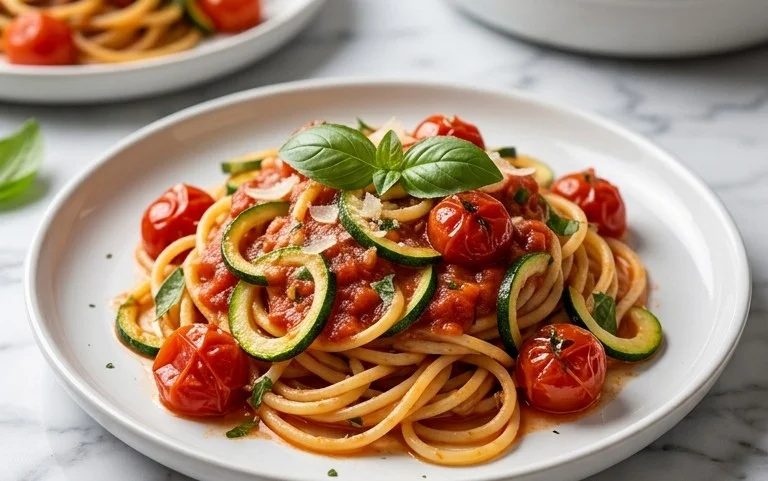
Healthy Tomato Zucchini Pasta is more than just a meal; it’s a vibrant celebration of fresh flavors and feel-good ingredients that I absolutely adore. In our busy lives, finding a dish that’s both incredibly satisfying and genuinely good for you can feel like striking gold. This is precisely what makes our Healthy Tomato Zucchini Pasta a weeknight winner and a weekend treat. We all crave those comforting pasta dishes, but the guilt can sometimes creep in. That’s where the magic of this recipe truly shines. By incorporating tender zucchini noodles (or a mix of pasta and zucchini for texture!), we amp up the nutrients and lighten the whole affair without sacrificing that beloved pasta experience. The bright, sweet burst of tomatoes perfectly complements the subtle, earthy notes of the zucchini, creating a harmonious and delicious symphony on your plate. It’s proof that healthy eating can be utterly delightful!
Healthy Tomato Zucchini Pasta
This healthy tomato zucchini pasta recipe is a vibrant and delicious way to enjoy a light yet satisfying meal. It’s packed with fresh vegetables and relies on simple, wholesome ingredients. I love this dish because it’s incredibly versatile – you can easily adapt it to your liking. Whether you’re looking for a quick weeknight dinner or a flavorful vegetarian option for guests, this pasta is sure to impress. The sweetness of the tomatoes and the mild, slightly nutty flavor of the zucchini create a beautiful harmony that’s elevated by a hint of garlic and fresh herbs. Plus, it’s a fantastic way to sneak in some extra veggies!
Ingredients:
Cooking the Pasta
The foundation of any great pasta dish is perfectly cooked pasta. For this recipe, I highly recommend using whole wheat pasta. It offers a more robust texture and a better nutritional profile than refined white pasta, providing more fiber and essential nutrients. When cooking, make sure you use a large pot and plenty of water. This prevents the pasta from sticking together. Bring the water to a rolling boil before adding your pasta. Add a generous pinch of salt to the boiling water; this seasons the pasta from the inside out, which is crucial for flavor. Cook the pasta according to the package directions until it is al dente – tender but still with a slight bite. It’s important not to overcook it, as it will continue to soften slightly when mixed with the sauce. Once cooked, drain the pasta, reserving about a cup of the starchy pasta water. This starchy water is liquid gold for pasta sauces, as it helps to emulsify the sauce and make it cling beautifully to the pasta.
Sautéing the Aromatics and Zucchini
While your pasta is cooking, you can begin extract preparing the vibrant vegetable sauce. Heat the olive oil in a large skillet or Dutch oven over medium heat. Olive oil is a great choice here for its healthy monounsaturated fats and its lovely flavor. Once the oil is shimmering, add the finely chopped onion. Sauté the onion for about 5-7 minutes, stirring occasionally, until it becomes translucent and softens. This process, known as sweating the onions, unlocks their natural sweetness. Be careful not to let them brown too much, as this can make them bitter. Next, add the minced garlic to the skillet. Garlic is so potent in flavor, and adding it towards the end of the onion sauté prevents it from burning, which can also result in a bitter taste. Cook the garlic for just about 30 seconds until it’s fragrant. You’ll know it’s ready when you can smell its wonderful aroma filling your kitchen.
Now, it’s time to introduce the star vegetables! Add the diced zucchini to the skillet. Stir the zucchini well to coat it with the onion and garlic mixture. Cook the zucchini for about 5-8 minutes, stirring frequently, until it starts to soften and turn a slightly brighter green. Zucchini releases a good amount of water as it cooks, so don’t be alarmed by any liquid that appears in the pan. This liquid will contribute to the sauce.
Building the Tomato Sauce
Once the zucchini has softened nicely, it’s time to add the tomatoes and herbs. Pour in the entire can of diced tomatoes, including their juices. The natural acidity of the tomatoes will help to deglaze the pan, picking up any flavorful bits stuck to the bottom. Add the dried oregano and dried basil to the sauce. These dried herbs are convenient and pack a lot of flavor. Stir everything together to combine. Bring the sauce to a gentle simmer. Reduce the heat to low, cover the skillet, and let the sauce simmer for at least 15-20 minutes. This simmering time is crucial for allowing the flavors to meld together beautifully and for the tomatoes to break down further, creating a richer sauce. You can simmer it for longer if you have the time; the flavors will only deepen.
Season the sauce generously with salt and freshly ground black pepper to taste. Remember that the pasta water you reserved is also salty, so taste your sauce before adding too much salt. This is also a good time to add any other seasonings you might enjoy, like a pinch of red pepper flakes for a touch of heat, or a splash of balsamic vinegar for a deeper, more complex flavor.
Combining Pasta and Sauce
After the sauce has simmered and thickened slightly, it’s time to bring everything together. Add the drained whole wheat pasta directly into the skillet with the tomato zucchini sauce. If the sauce seems a little too thick, now is the time to use that reserved pasta water. Add about a quarter cup of the starchy pasta water to the skillet. Stir gently to coat all the pasta with the sauce. The starch in the water will help the sauce emulsify and create a glossy, appealing texture that clings to every piece of pasta. Continue to stir until the sauce is evenly distributed and the pasta is well-coated. If you prefer a saucier pasta, add a little more pasta water, a tablespoon at a time, until you reach your desired consistency.
Finishing and Serving
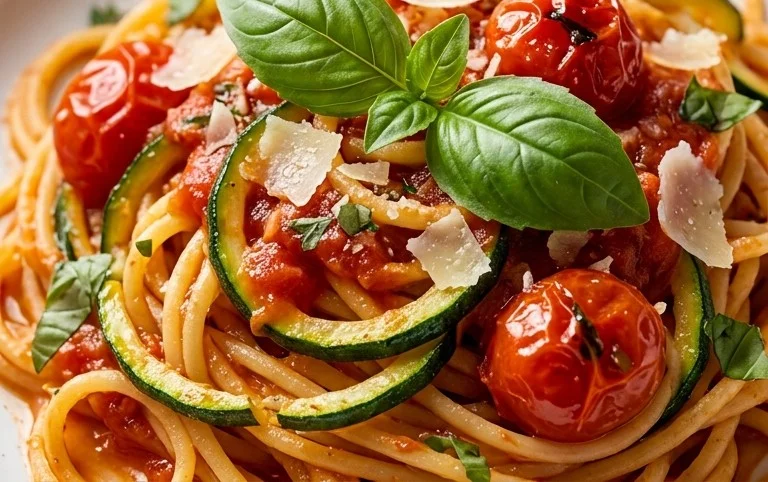
For an extra burst of freshness, stir in some chopped fresh basil leaves just before serving. The heat from the pasta and sauce will gently wilt the basil, releasing its aromatic oils and bright, herbaceous flavor. This adds a wonderful finishing touch that elevates the entire dish. Serve the healthy tomato zucchini pasta immediately. It’s delicious on its own, but for an extra layer of flavor and richness, you can sprinkle some grated Parmesan cheese over the top. This dish is a testament to how simple, fresh ingredients can create something truly satisfying and nourishing. Enjoy this delightful and healthy meal!
Conclusion:
I hope you’ve enjoyed learning how to make this incredibly delicious and healthy tomato zucchini pasta! This recipe is a true winner because it’s packed with fresh, vibrant flavors and nourishing ingredients. The sweetness of ripe tomatoes perfectly complements the mild, tender zucchini, creating a light yet satisfying meal that feels both comforting and guilt-free. It’s so versatile and quick to prepare, making it an ideal weeknight dinner solution or a healthy lunch option.
For serving, I love pairing this pasta with a sprinkle of fresh basil and a dollop of creamy ricotta or a good quality Parmesan cheese. A side salad with a light vinaigrette is also a wonderful accompaniment. If you’re looking for variations, feel free to add other vegetables like bell peppers or spinach, or boost the protein with grilled chicken, shrimp, or chickpeas. Don’t be afraid to experiment with different pasta shapes – penne, fusilli, or even whole wheat spaghetti work beautifully.
I truly encourage you to give this healthy tomato zucchini pasta a try. It’s a fantastic way to incorporate more vegetables into your diet without sacrificing taste or enjoyment. Let me know how yours turns out!
Frequently Asked Questions:
Can I make this recipe ahead of time?
Yes, you can definitely make this recipe ahead of time! The flavors often meld even more beautifully overnight. Simply store the cooled pasta and sauce in an airtight container in the refrigerator. When you’re ready to serve, reheat gently on the stovetop or in the microwave, adding a splash of water or vegetable broth if it seems a little dry.
What kind of tomatoes work best?
For the best flavor, I recommend using ripe, fresh tomatoes. Cherry tomatoes or Roma tomatoes are excellent choices as they tend to be sweeter and less watery. If fresh tomatoes aren’t in season or readily available, you can substitute them with a can of good quality diced tomatoes, but fresh will always offer a brighter taste.
Is this recipe suitable for vegetarians or vegans?
This recipe is naturally vegetarian as written! For a vegan version, simply omit the Parmesan cheese or use a vegan alternative. Nutritional yeast can provide a cheesy flavor if you’re looking for a vegan option.
Healthy Tomato Zucchini Pasta
A light and flavorful pasta dish featuring fresh tomatoes, zucchini, and a simple sauce, perfect for a weeknight meal.
Ingredients
-
1 pound pasta
-
2 tablespoons olive oil
-
1 medium zucchini, diced
-
1 large onion, chopped
-
2 cloves garlic, minced
-
1 (28 ounce) can crushed tomatoes
-
1 teaspoon dried oregano
-
Salt and freshly ground black pepper to taste
-
Fresh basil leaves, for garnish
Instructions
-
Step 1
Cook pasta according to package directions. Drain, reserving about 1/2 cup of pasta water. -
Step 2
While pasta is cooking, heat olive oil in a large skillet over medium heat. -
Step 3
Add diced zucchini and chopped onion to the skillet and cook until softened, about 5-7 minutes. -
Step 4
Stir in minced garlic and cook for 1 minute more until fragrant. -
Step 5
Add crushed tomatoes and dried oregano. Season with salt and pepper. Bring to a simmer and cook for 10 minutes, stirring occasionally. -
Step 6
Add the cooked pasta to the skillet with the sauce. Toss to coat. If the sauce is too thick, add a little of the reserved pasta water to loosen it. -
Step 7
Serve immediately, garnished with fresh basil leaves.
Important Information
Nutrition Facts (Per Serving)
It is important to consider this information as approximate and not to use it as definitive health advice.
Allergy Information
Please check ingredients for potential allergens and consult a health professional if in doubt.