Easy Tanghulu Recipe-Chinese Candied Fruit Fun
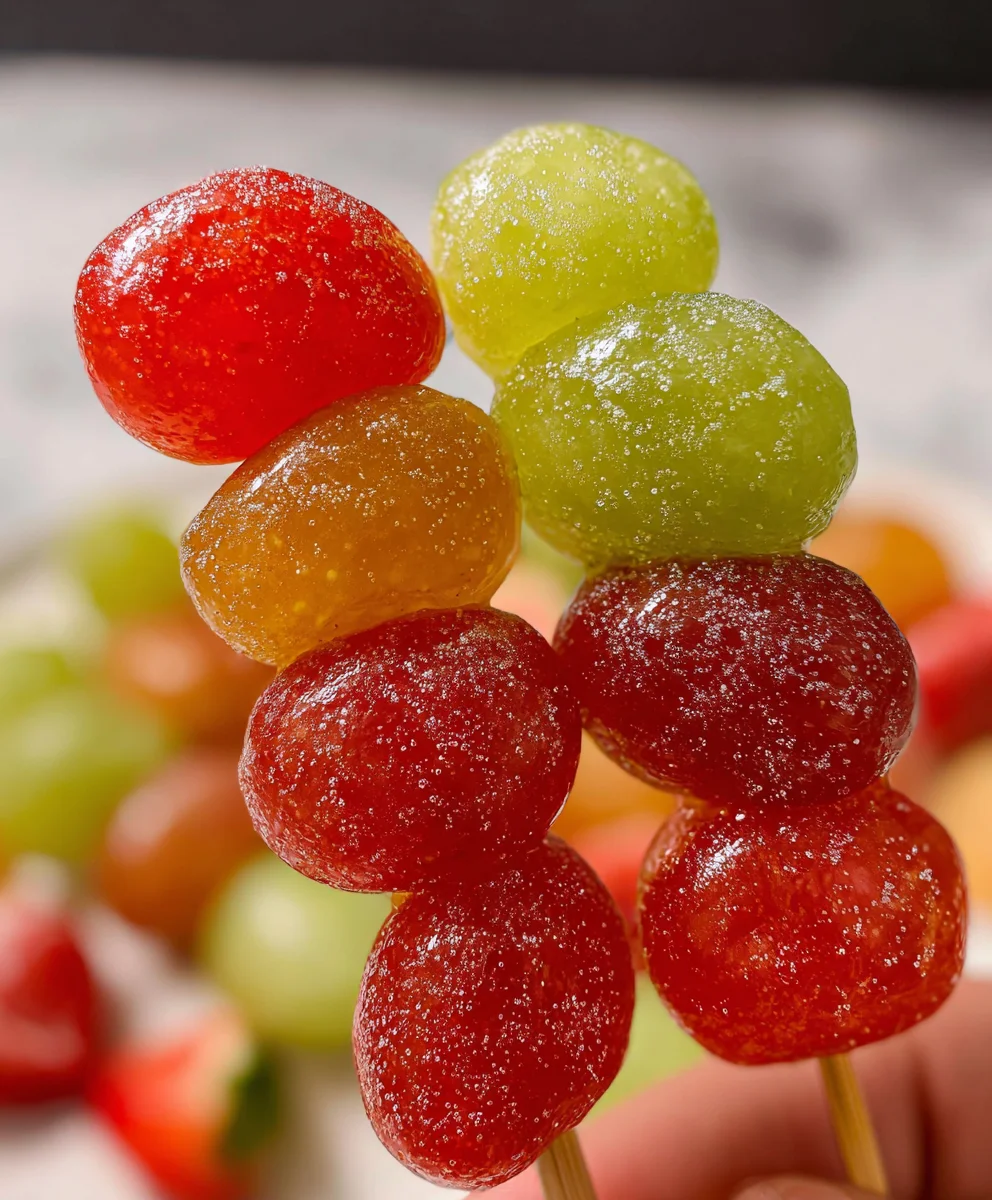
Tanghulu Recipe (Chinese Candied Fruit) is more than just a dessert; it’s a delightful adventure for your taste buds and a charming piece of street food culture that has captivated hearts worldwide. Imagin extracte vibrant fruits, glistening under a crystal-clear, crackling candy shell. That’s the magic of tanghulu, a treat so visually stunning it feels almost too beautiful to eat, yet so incredibly delicious you won’t be able to stop at just one. People adore tanghulu for its perfect balance of sweet and tart, the satisfying crunch of the sugar coating giving way to the juicy burst of fresh fruit. What truly makes this Tanghulu Recipe (Chinese Candied Fruit) special is its simplicity and the joy it brings, transforming everyday fruits into something truly extraordinary and festive. It’s a nostalgic bite for many and an exciting discovery for newcomers, promising pure, unadulterated happiness with every shimmering skewer.
Ingredients:
- 1 lb strawberries, grapes, or other fruit of choice (~30 pieces)
- 2 cups white sugar
- 1 cup water
Preparing the Fruit
Washing and Drying
The first crucial step in achieving perfectly candied fruit is to ensure your chosen fruit is meticulously clean and, most importantly, dry. For strawberries, this means gently rinsing them under cool running water and then carefully patting them dry with paper towels. Any excess moisture on the fruit will prevent the hot sugar syrup from adhering properly, leading to a sticky, uneven coating rather than a crisp, glassy shell. If you’re using grapes, simply give them a good rinse and then spread them out on a clean kitchen towel or paper towels to air dry completely. For other fruits, the principle remains the same: wash thoroughly and dry completely. Remove any stems or leaves from the strawberries. If you’re using grapes, you can leave them on the stem in small clusters or remove them individually, depending on your preference for presentation. Smaller, bite-sized pieces are generally easier to handle and coat evenly.
Skewer Preparation
Next, you’ll need to prepare your skewers. Wooden skewers work wonderfully for tanghulu. If you’re using wooden skewers, it’s a good idea to soak them in water for at least 30 minutes before you begin extract. This prevents the wood from burning when you insert them into the hot fruit and syrup. Once soaked, carefully thread your prepared fruit onto the skewers. Aim for about 3-4 pieces of fruit per skewer, leaving a small space between each piece. This spacing will make it easier to dip each piece into the sugar syrup without them sticking together in one large clump. Make sure the fruit is pushed securely onto the skewer but not so tightly that it ruptures.
Making the Candied Coating
Creating the Sugar Syrup
Now comes the magic of creating that signature glassy candy coating. In a medium-sized, heavy-bottomed saucepan, combine the 2 cups of white sugar and 1 cup of water. It’s important to use a heavy-bottomed pan as this helps distribute heat evenly and prevents the sugar from scorching. Stir the sugar and water together until the sugar is mostly dissolved. You don’t need to stir vigorously, just enough to help it dissolve initially. Place the saucepan over medium-high heat.
Boiling and Reaching Temperature
Once the mixture comes to a boil, stop stirring. The key to perfect tanghulu is letting the syrup boil undisturbed until it reaches the correct temperature. You’ll need a candy thermometer for this. Clip it to the side of the saucepan, making sure the tip is submerged in the syrup but not touching the bottom of the pan. You’re looking to reach a temperature of approximately 300-310 degrees Fahrenheit (149-154 degrees Celsius), which is the hard crack stage. This stage is critical. If the syrup isn’t hot enough, your coating will be sticky. If it’s too hot, it can burn and become bitter. Watch the thermometer closely. You’ll see the syrup start to bubble and thicken. It will transition from a clear liquid to a slightly amber color as it approaches the hard crack stage. This process can take anywhere from 10 to 20 minutes, depending on your stovetop.
Cooling and Dipping
Once the syrup reaches the desired 300-310°F (149-154°C), immediately remove the saucepan from the heat. This is where speed and precision are key. Let the syrup sit for about 30 seconds to a minute to stop bubbling vigorously. Then, working quickly, take one fruit skewer at a time and dip it into the hot syrup. Rotate the skewer gently to ensure an even coating all around the fruit. You want to coat the fruit completely, but avoid letting it drip too much. A quick dip and a gentle swirl is usually sufficient. Some people like to tilt the pan slightly to get better access to the syrup. As you lift the skewer out of the syrup, allow any excess to drip back into the pan for a second or two.
Cooling and Serving
Setting the Candied Fruit
After dipping each skewer, carefully place it on a parchment paper-lined baking sheet or a silicone mat. Make sure to leave a little space between each skewer so they don’t stick to each other as they cool. The hot syrup will harden very quickly on contact with the cooler fruit and air. You’ll see the glossy, hardened shell form almost immediately. Be extremely careful when handling the hot syrup and the dipped skewers; the sugar is molten and can cause severe burns. It’s helpful to have your fruit skewers ready and lined up next to your dipping station before you start the syrup process.
Final Touches and Enjoyment
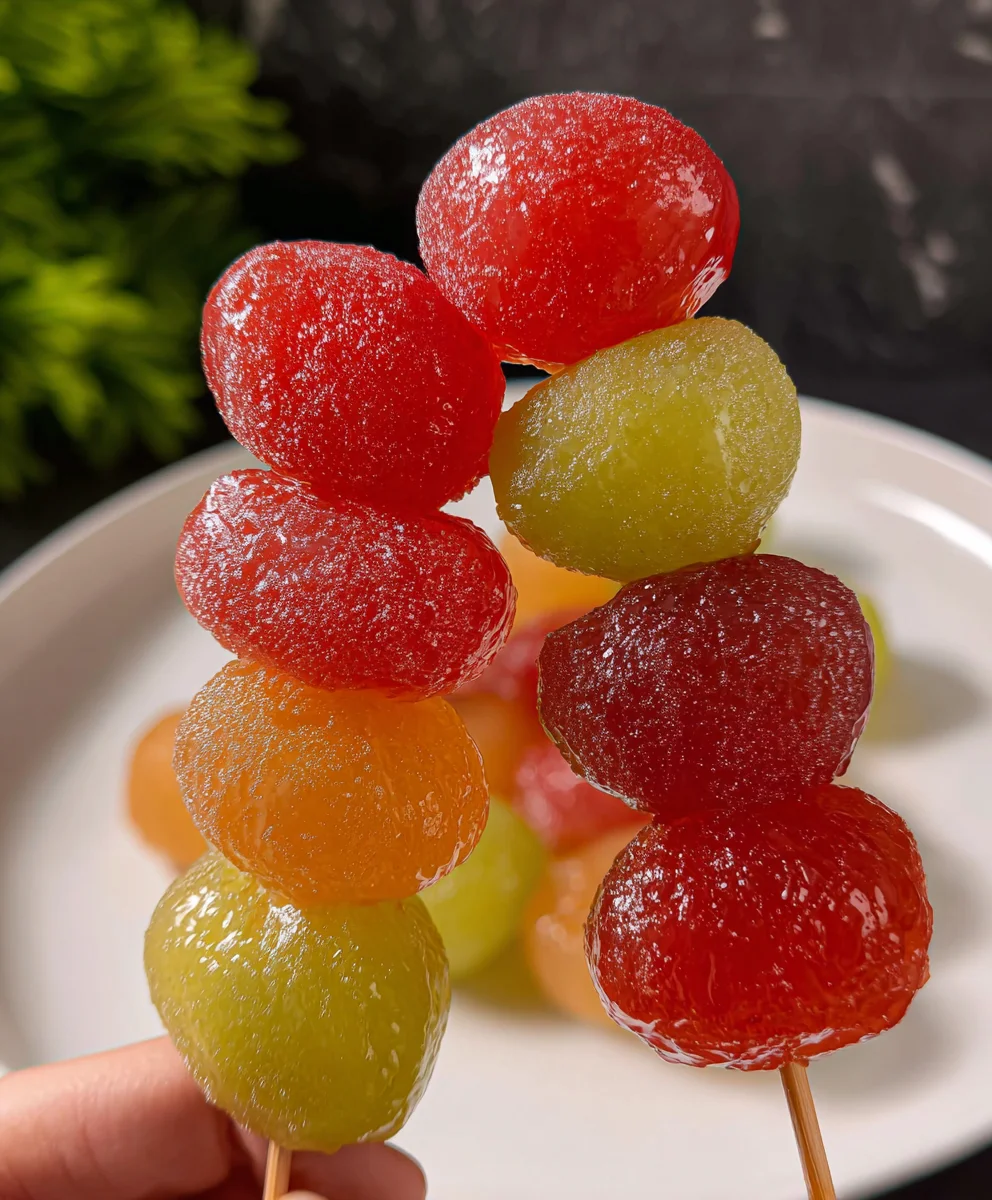
Allow the tanghulu to cool and harden completely at room temperature. This typically takes about 15-20 minutes. Once fully cooled, the candy shell should be hard, brittle, and beautifully translucent. You’ll know they’re ready when you can tap them lightly and hear a distinct “tap” sound, indicating a fully hardened shell. The tanghulu is best enjoyed shortly after it has cooled, as the humidity in the air can eventually make the candy coating slightly sticky over time. Serve your homemade tanghulu as a delightful sweet treat or a beautiful dessert centerpiece.
Conclusion:
You’ve now learned how to create the delightful and visually stunning Tanghulu Recipe (Chinese Candied Fruit) right in your own kitchen! This recipe is a fantastic way to enjoy a classic Chinese street food treat that’s both incredibly delicious and surprisingly easy to make. The combination of crisp, caramelized sugar coating with the juicy, fresh fruit inside is simply irresistible. We encourage you to try this recipe and experience the joy of making your own beautiful Tanghulu. Don’t be afraid to experiment with different fruits to discover your personal favorites!
For serving, Tanghulu is best enjoyed fresh, ideally within a few hours of making it, to ensure the candy coating remains perfectly crisp and the fruit is at its peak. It makes for a wonderful dessert, a fun activity for kids, or a unique addition to a party spread. Consider serving it alongside a cup of tea or as a sweet finnon-alcoholic ale to a meal. Don’t hesitate to get creative with the fruit combinations – strawberries, grapes, cherry tomatoes (surprisingly good!), and even small slices of apple work wonderfully.
Frequently Asked Questions:
How long does Tanghulu last?
Tanghulu is best eaten fresh, typically within 24 hours of preparation. After this, the sugar coating can start to become sticky or melt, especially in humid conditions, and the fruit can release more moisture.
What is the best kind of fruit to use for Tanghulu?
While strawberries and grapes are classic choices, almost any firm fruit works well. Consider options like small whole fruits (cherries, blueberries) or cut fruits (melon chunks, orange slices, kiwi pieces). Ensure the fruit is dry before dipping to help the sugar adhere properly.
My sugar coating is cloudy, what did I do wrong?
Cloudy sugar often results from sugar crystals forming. This can happen if you stir the sugar syrup too much once it starts to cook, or if there are impurities in the sugar or water. Aim for a clean pot and minimal stirring once the sugar dissolves.
Easy Tanghulu Recipe
A simple and fun recipe for making authentic Chinese candied fruit, known as Tanghulu. Enjoy a crisp, glassy candy shell over your favorite fruits.
Ingredients
-
1 lb strawberries, grapes, or other fruit of choice (~30 pieces)
-
2 cups white sugar
-
1 cup water
-
Wooden skewers
-
Parchment paper
Instructions
-
Step 1
Wash and thoroughly dry your chosen fruit. Remove any stems or leaves. If using grapes, you can leave them on small clusters or remove them individually. Push 3-4 pieces of fruit securely onto each wooden skewer, leaving a small space between pieces. Soak wooden skewers in water for at least 30 minutes to prevent burning. -
Step 2
In a heavy-bottomed saucepan, combine 2 cups of white sugar and 1 cup of water. Stir until the sugar is mostly dissolved over medium heat. -
Step 3
Bring the sugar mixture to a boil over medium-high heat. Stop stirring and insert a candy thermometer, ensuring the tip is submerged in the syrup but not touching the bottom. Boil until the syrup reaches 300-310°F (149-154°C), the hard crack stage. This may take 10-20 minutes. -
Step 4
Once the syrup reaches the target temperature, immediately remove the saucepan from the heat. Let it sit for 30 seconds to a minute to stop vigorous bubbling. Quickly dip each fruit skewer into the hot syrup, rotating to ensure an even coating. Allow excess syrup to drip back into the pan for a second or two. -
Step 5
Carefully place each dipped skewer onto a parchment paper-lined baking sheet or silicone mat, leaving space between them. Allow the tanghulu to cool and harden completely at room temperature for about 15-20 minutes.
Important Information
Nutrition Facts (Per Serving)
It is important to consider this information as approximate and not to use it as definitive health advice.
Allergy Information
Please check ingredients for potential allergens and consult a health professional if in doubt.